Thursday, February 4, 2010

One percent is more than you think

Maple Leaf Adventures is one of many Wilderness Tourism Association members who gave one percent of revenue to environmental causes last year as part of 1% for the Planet. The tall masted schooner tour operator, pictured at right, belongs to the environmental non profit created by Patagonia founder Yvon Chouinard and Craig Matthews, owner of Blue Ribbon Flies. 1% For The Planet verifies donations and evaluates recipient organizations to ensure donations are truly going to benefit nature.

Subscriber businesses can pick what organizations they want to donate to. In Maple Leaf’s case it was the Wilderness Tourism Association and Raincoast Conservation Foundation, a conservation organization on the B.C. central coast.

Raincoast used the 2009 donation to publish their annual Tracking Raincoast, a compilation of the year's scientific research and findings, conservation work and plans for the future. In 2008, Raincoast used Maple Leaf's donation to assist with spring and fall monitoring of their 24,000 sq km guide-outfitting territory. The organization bought the license for hunting grizzlies in the tenure and patrol to watch for illegal hunting and other activities that negatively impact grizzlies. 

The WTA used the money to fund its advocacy and education work to enhance the wilderness tourism experience in B.C.

Maple Leaf captain and owner Kevin J. Smith says donating money to causes like 1% for the Planet are part of a long term vision needed to make a difference in wild places. “I’m talking about the governments that created parks and protected areas, and all the people that proposed those to the governments. Also the people that worked so hard to make hunting whales illegal. Now humpback whales are delighting our guests all along the coast. That’s investment in nature coming to fruition on many fronts.” 

Monday, January 4, 2010

Siwash goes totally solar for sustainability

For remote, wilderness businesses getting electrified is expensive. The easiest option is a diesel generator, but these are polluting, noisy and always hungry for cash. Few operations can ever get rid of them completely, relying on them as a backup, but many members of the Wilderness Tourism Association have found ways to augment their power with sustainable means.

Siwash Lake Guest Ranch, a luxury, boutique guest ranch, is one of the few using solar power (pictured). And this fall, with the help of EA Energy Alternatives, the fly fishing and horseback riding operation ramped up their solar feed to offset 90 percent of their diesel generator.  The ranch installed a state-of-the-art solar photovoltaic system for electricity creation and also retro-fit the hot water heating system, along with new technology to capture excess energy from heated water.  The ranch is also switching from gas powered to solar powered pumps for irrigation and other water systems.

“This project will save $32,000 per year in fuel costs and reduce our annual carbon footprint by 123 tons of green house gases. This is the equivalent of taking 22 passenger vehicles of the road for one year," says Allyson Rogers, owner and proprietor at Siwash Lake Ranch. "At Siwash Lake Ranch we are an advocate of local energy-efficiency and we’re proud to set an example for other small businesses that want to achieve both growth and a small environmental footprint. Our guests are excited about all the work we do to make our operations as sustainable as possible and they’ve told us they also want to support other similar businesses that show innovation and leadership in response to the needs of our planet.”

This is far from all Siwash has committed to doing for the environment. Read more on their website under sustainability or in a stewardship story I wrote about them (you can also read about some other alternative energy projects).

Tuesday, December 15, 2009

Go north, life is peaceful there. Go north, in the open air.


I know it's not even Christmas yet, but it is time to start thinking about next summer's adventures. What are you going to do? Well if you're like a lot of Canadians going north on a canoe or raft trip is on life's list. A recent article in Canoe Roots Magazine says knocking off one of Canada's fabled wilderness rivers is a top priority for many. North of 60 is where a lot of these rivers are, but don't overlook northern B.C. The area is huge, wild and full of water. Operators say it is one of the few places where there are still rivers where you will be alone for weeks. Watch for a new guidebook to northern B.C. rivers in early 2010 from Laurel Archer. If you prefer guided, which is a good idea for anyone who doesn't have several expedition style trips under their belt, then consider these companies and the trips they lead:

Nahanni River Adventures/Canadian River Adventures: Guiding the Tatshenshini, Babine, Taku, Stakine, Gataga rivers of B.C.
Stikine River Song: all service cafe and boat rental on the Stikine River.
Skeena Valley Expeditions: Day and expediton trips on the Skeena, Babine and Tatshenshini rivers.
ROAM: Among other BC river trips, they guide the Tatshenshini.

Friday, December 11, 2009

Give sustainability

It's two weeks until Christmas, which means it's almost time to start panicking about what to get people. Instead of hunting for a bunch of gifts that my relatives might not even use I've decided to give gifts that give back this year.


One of the easiest ways is to donate to a charity in someone else's name or buy a gift with a pay it forward mentality. For instance the World Wildlife Fund has a large range of animals up for "adoption." These are great gifts for kids. Buy the caribou and you'll get a high-quality cuddly toy, a personalized adoption certificate and a report detailing the work that your symbolic adoption will support. In B.C. the mountain caribou is in serious trouble and a donation to the WWF will help the species survive. A leopard frog is another good choice to help support B.C.'s environment. Once commonly found in British Columbia, the Northern leopard frog is now limited to the extreme southeastern portion of the province and has been designated as endangered in the region - loss of habitat is the most significant cause of the decline. The WWF has lots of other gift options where proceeds go to conservation work.

Another option is to give to specific causes. The WTA and its members are working for and donating to a number of causes that support wildlife and wildspaces including Save Our Wild Salmon and Adopt-a-Fry.org. Cash donations are a great way to further their work. You can also ask your favourite resorts and lodges about causes that are close to their heart. Or if you want to make it as easy as possible donate to the WTA's own Wilderness Stewardship Fund. Donations can be made in any amount. The money in the fund is used to help organizations and companies complete worthwhile sustainability and stewardship work throughout the year.

Friday, December 4, 2009

Kumsheen River Rafting wins best business to work for award

Happy staff makes a good company. So making BC Business Magazine's Best Company to Work For: Under 100 Employees is very telling for Kumsheen River Rafting. In the brief article about the company in the December issue of the magazine is a anonymous quote collected as part of the survey: “Most organized company I’ve worked for. All employees here are amazing people. We’re all family. After-work activities are endless."

 The 55-person, Lytton based company is the only tourism related company that made the magazine's annual Best Company awards, which result from nominations and surveys. It's a family run operation, started 1973 by Bernie Fandrich. His son Braden now runs it, continuing the tradition of offering day and overnight trips down the big, rough waters of the Thompson and Fraser rivers from their comfy base in B.C.'s arid southeastern interior.

I chatted with Braden a year or so ago about the family operation for a stewardship story. It's a great company that works to protect the rivers, land and air that they operate around and obviously treats their staff equally well.

Congrats Kumsheen

Saturday, November 28, 2009

Winter is here and it's deep


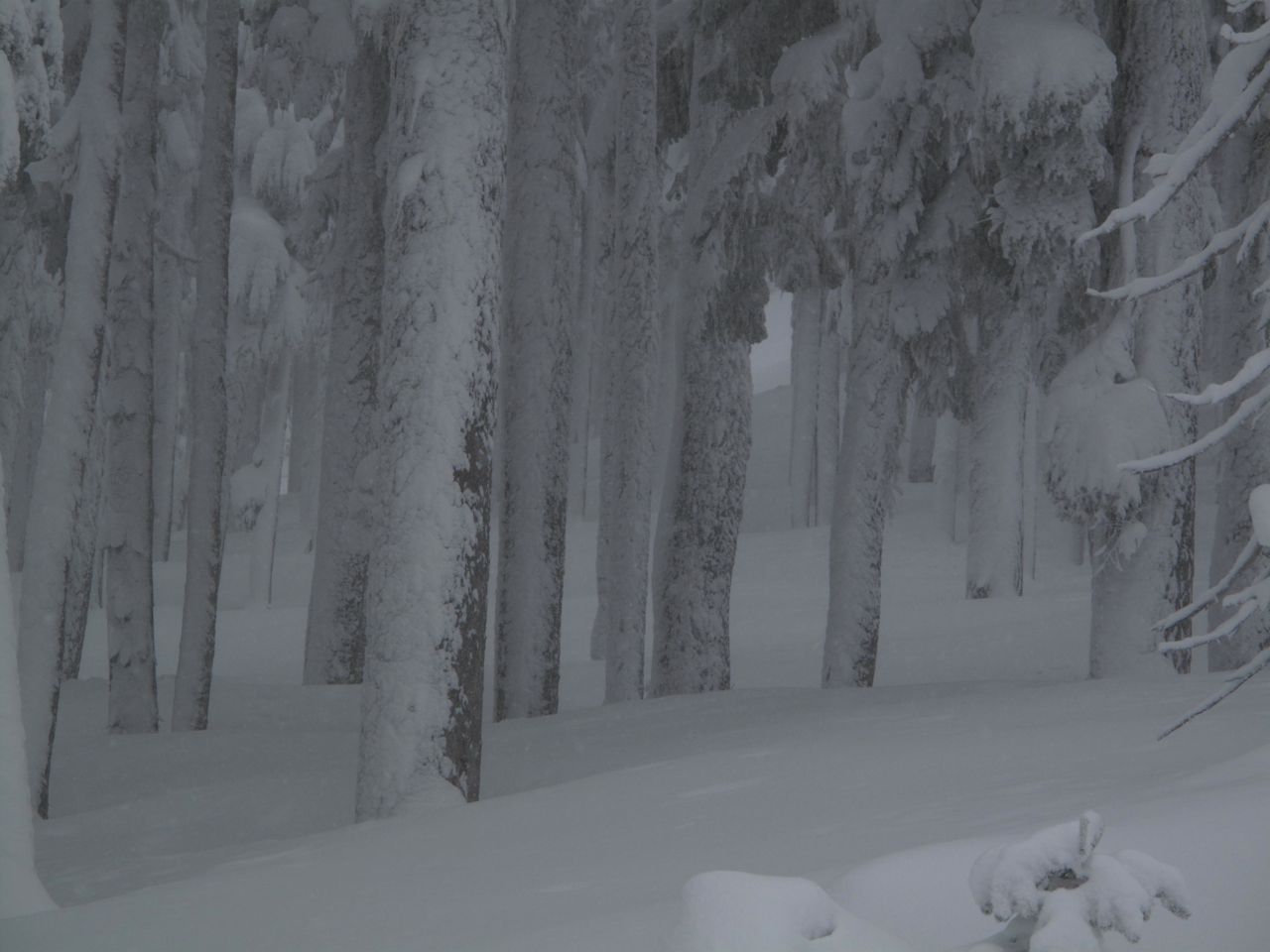
November has been a big month at wintercentric resorts across B.C. Records have been set and above average amounts of snow are on the ground almost everywhere.

Leading the way is the Coast Range where record November snowfalls have landed with more than 500 centimetres of snow falling in some locations. Elsewhere the snow hasn't been quite so prodigious but areas that often suffer from troubling early season layers in the snow pack, that make avalanche conditions a worry all season long, are looking at one of the most stable snowpacks in recent memory. It all adds up to a great looking season for snow focused resorts, lodges and huts across the province.

The Backcountry Lodge's of BC are looking at an excellent winter. Most of these rustic mountain hotels froze 2009 pricing for this winter. Plus, they often offer reduced rates for pre-Christmas visits. With so much snow on the ground it is a good year to jump on that offer. Conditions are looking really good at Burnie Glacier Chalet, Campbell Icefield Chalet and Mistaya Lodge.

The members of HeliCat Canada Association, a group of the best helicopter and cat skiing operations, are looking forward to a big winter, too. Like the backcountry lodges, many offer less expensive packages in the early season. Ask many ski guides and they'll tell you early season conditions are often the deepest.

Some are offering some interesting new packages. Bella Coola Heli Sports has amalgamated their two operations, one in the Pantheon Range and one near Bella Coola, and are now offering a package that includes time at both lodges and a 200 kilometre flight skiing across both tenures. Last Frontier, the proud owners of the largest tenure on earth, also have two lodges and a safari package that includes time at both. In addition this year they're offering a heli-assited touring package that involves time ski touring with the assistance of a helicopter.

If images and video of horses running through deep, fluffy snow catches your imagination check out the members of the BC Guest Ranchers Association. Many of the dude ranches are open during the winter with sled rides, winter horseback riding, tobogganing, excellent wildlife viewing and cross country skiing.

Wednesday, November 25, 2009

Ski films go to the Last Frontier

Two of this season's top ski movies include footage from Last Frontier Heliskiing, the largest heli-ski tenure on earth. Both Matchstick Productions (MSP) and Teton Gravity Research (TGR) spent time at the remote heli-ski operation last season filming athletes skiing crazy lines in big mountains.


Re: Session, TGR's new ski title, includes footage of pro skier Seth Morrison. It was his first visit to Last Frontier and he was impressed. "The skiing is very similar to what I have skied in Alaska, but it has many more options for down-day type skiing (bad weather skiing). Many tree runs with tons of features in them; cliffs, pillow walls, pillow poppers. And with a tenure a quarter the size of Switzerland, we barley scratched the surface."

I watched MSP's new movie, In Deep, and the footage was impressive. Check out this picture by Randy Lincks from Last Frontier.

Last Frontier has two bases in northwestern B.C. One is the remote Bell 2 Lodge on the Cassiar Highway. The other is in the town of Stewart on the Alaska border. Each accesses different part of Last Frontier's massive 9,000 square kilometre tenure.

Besides their usual four, five and seven day heli-ski trips, Last Frontier is offering two new programs for 2010:

A Lodge to Lodge Heliski Safari: a tour which has guests staying half the week at one lodge and then skiing with the helicopter to the other lodge. Bags go by ground.

Heli Access Ski Touring: for the purist. Start the week with 4 days of helis access ski touring. 1st run of the day lifted out by helicopter. Stay with you guide all day ski touring. Could be short tree runs, a long traverse, or one big climb and a descent, but you'll certainly be earning your turns! Then the final 3 days of the week are "regular heliskiing".